Frenchie Davis Returns to Artscape with a Voice Rooted in Access, Art, and Community
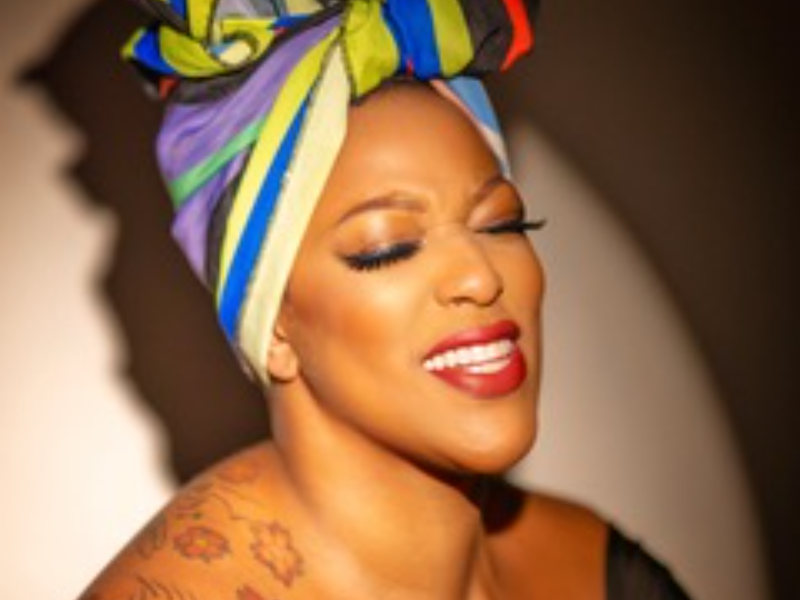
Adrian Harpool For the Baltimore TimesWhen Frenchie Davis talks about Baltimore, she speaks with the warmth of an artist who understands that a city is more than a stop on a performance schedule. It is a place with rhythm, memory, struggle, beauty, and possibility. As she prepares to perform at Artscape in Baltimore City for the second time, Davis is bringing more than powerhouse vocals. She is bringing a deep belief that art belongs to everyone.
“This is my second time doing Artscape,” Davis said, reflecting on what makes the festival meaningful to her. “What I really love about the Artscape model is that it’s free to audiences, and I believe that art should be accessible to everyone. It shouldn’t be this elite, out-of-reach thing that only a certain group of people should have access to.”
That spirit of accessibility is central to Artscape’s identity. Baltimore City describes Artscape as the nation’s largest free outdoor arts festival, featuring visual art, music, poetry, street dance, and other forms of creative expression that help foster community engagement and cultural innovation.
For Davis, that mission resonates personally. The singer and Broadway performer has built a career across television, theater, and music, but she has never lost sight of the communities that shape artists and audiences alike. She joined the Broadway cast of “Rent,” where she performed for four years. In 2011, she reached the top eight on the first season of NBC’s “The Voice.”
Davis’ career extends well beyond the television competition stage. Her theater credits include Rent, Dreamgirls, Ain’t Misbehavin’, Cinderella and other stage productions. She has also recorded dance and pop music, including her 2012 solo single “Love’s Got A Hold On Me,” which reached Billboard’s Dance Chart.
Yet, when Davis speaks about Baltimore, she does not lead with résumé lines. She speaks as a student of culture. “I’m a huge nerd,” she said with affection. “I love art history, musical theater history.”
That love of history helps explain why she sees Baltimore as part of a larger artistic story, especially for Black and brown performers. “What I love about Baltimore is that it’s not just a place where artists come from,” Davis said, “but it’s also a place where artists, typically Black and brown artists, find their voice and find where they fit in this world of art.”
Davis also connects the city to a broader musical lineage. In her remarks, she referenced Baltimore’s connection to legendary artists and the way the city has helped shape American music and performance. That sense of place matters to her, especially because of her own ties to the region. Davis graduated from Howard University with a Bachelor of Fine Arts, grounding her formal artistic education in Washington, D.C., just down the road from Baltimore.
“Having gone to Howard, I feel a very strong connection to D.C., Maryland,” Davis said. “I feel like I have found a wonderful community of artists and just a wonderful community in general in Baltimore.”
Her return to Artscape is therefore not just another booking. It is a continuation of a relationship with a region that Davis believes has nurtured artists, opened doors, and created space for authentic voices. Her appearance also comes at a time when public arts programming carries renewed importance. For many families, free festivals like Artscape offer rare access to live music, visual art, and cultural experiences without the burden of a ticket price.
Davis said that is exactly why the festival matters.
“I think it’s really powerful that Artscape has created space where art can be accessible to the community that looks like the people that make art in America,” she said. “Baltimore has contributed so much to our musical heritage as the home of icons like Billie Holiday and big band leader Chick Webb. The soul of this city inspired Nina Simone’s ode to Baltimore and inspires me and so many other artists that have gleaned from its flavor and texture,” Ms. Davis continued.
At Artscape, audiences can expect the kind of performance that has defined Davis’ career: bold, soulful and emotionally direct. But they can also expect something deeper… a performer who understands that a stage in Baltimore is not just a platform for entertainment. It is a meeting place between history and the future, between artist and community, between voice and belonging.
For Davis, the beauty of Artscape is that everyone is invited.
And for Baltimore, her return is another reminder that when art is made accessible, it becomes more than a performance. It becomes a shared civic experience.